Matt The Cat presents the soul that came before rock n’ roll: 1950s rhythm and blues. Each week, this underrated and rollicking music plays on that old Rockola Jukebox in the back.
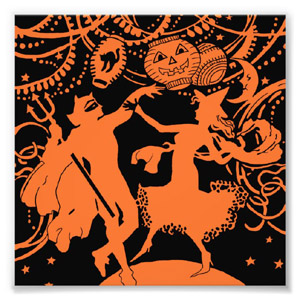
Halloween has always been a frightfully good time of the year for the “Juke In The Back.” This year, Matt The Cat, along with Miss Rosie and Bobby The Bobcat bring you a cauldron of ghoulishly spooky tunes from the 1940s and ’50s. The program is heavy with devilish doo wop delights from The Cadillacs, The Del Vikings, The Verdicts, The Coasters, The Checkers and The Daylighters. There are tunes by Chuck Berry, Mad Man Jones and Louis Armstrong that will make your skin crawl, while Eugene Fox lays a cautionary tale on our ears about the dead returning to keep the living in line. So keep your spooks close, but your records closer and dig on some rarely heard haunted tunes on this week’s Halloween “Juke In The Back.”
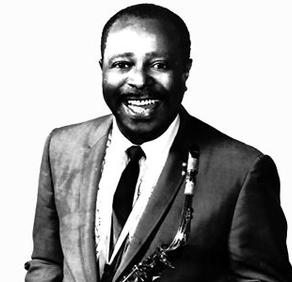
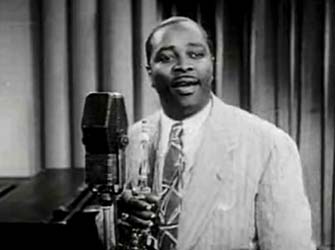
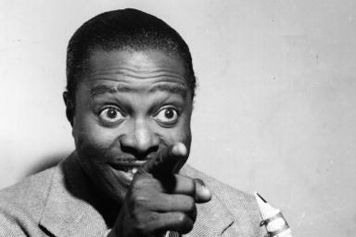
The “Juke In The Back” presents Part 6, the final part of our mammoth, 6 part series, on the most important musical figure of the 1940s, Louis Jordan. He was the most successful African-American artist of the decade, selling millions of records to both Black and White audiences. Jordan charted 57 singles between 1942 and 1951, scoring 18 #1 R&B hits and 54 top 10s. Several of his records even crossed over into the Pop Top 10, which was an almost unheard of feat at the time. Matt The Cat closes the series focussing on 1950 through ’56, just as Rock ‘n Roll was breaking. Jordan scored his 18th and final #1 R&B record in 1951 with “Blue Light Boogie Pt. 1 & 2” and experimented with fronting a big band for a time in ’52. By the end of ’53, Jordan’s 15 year stint with Decca Records ended. He next recorded some stellar sides for Aladdin Records, Vic, X and Mercury, but the hits were long gone. The singles on this week’s program show that even in the lean times, Louis Jordan still put out quality records. He made some strong efforts at trying to capture the Rock n’ Rollers, but his time in the musical limelight was over. There is no denying that Louis Jordan is almost single-handily responsible for the development of post War Rhythm & Blues as well as the birth of Rock n’ Roll. The “Juke In The Back” is proud to have dedicated 6 programs to this legendary performer and American Icon.
The “Juke In The Back” presents Part 5 of our mammoth, 6 part series, featuring the most important musical figure of the 1940s, Louis Jordan. He was the most successful African-American artist of the decade, selling millions of records to both Black and White audiences. Jordan charted 57 singles between 1942 and 1951, scoring 18 #1 R&B hits and 54 top 10s. Several of his records even crossed over into the Pop Top 10, which was an almost unheard of feat at the time. Part 5 of our series focuses on mid-1948 thru the beginning of 1950. During this time, Jordan only scored 2 #1 records and so it has become a much overlooked period in his career, even though he released some very strong singles. We’ll hear two songs that were featured in motion pictures as well as 2 duets, one with Martha Davis and another one with Ella Fitzgerald. Though the hits weren’t as strong as previous years, Jordan did score a career highlight with “Saturday Night Fish Fry,” which topped the R&B Chart for an impressive 12 weeks. His competition in the R&B Field was getting much stronger, but Louis Jordan and His Tympany Five continued to record and release top-notch material. Pianist Bill Doggett is even featured on a few sides. This is the second to last part of my loving tribute to the great and influential Louis Jordan.
The “Juke In The Back” presents Part 4 of our mammoth, 6 part series, featuring the most important musical figure of the 1940s, Louis Jordan. He was the most successful African-American artist of the decade, selling millions of records to both Black and White audiences. Jordan charted 57 singles between 1942 and 1951, scoring 18 #1 R&B hits and 56 top 10s. Several of his records even crossed over into the Pop Top 10, which was an almost unheard of feat at the time. Part 4 of our series focuses on the incredible hit-making years of 1947 and ’48. Jordan scored 4 #1 records in 1947, spending an amazing 40 weeks at the top of the Race Record Chart (the name of the R&B chart at that time). The year was kicked off with “Ain’t Nobody Here But Us Chickens,” which topped the chart for 17 weeks and nearly every record that Decca issued on Jordan that year was a major seller. “Ain’t Nobody Here But Us Chickens” became the catchphrase of 1947, along with “Open The Door, Richard.” The latter was a tune based on a Black Vaudeville routine, which hit #2 on the R&B charts by 4 different artists, including Louis Jordan. Count Basie’s version of “Richard” crossed over to #1 on the Pop Chart, making “Richard” a huge crossover success. We’re also highlighting the first half of 1948. It’s still a big year for Jordan, but the hits begin to slow down a bit. He only scored 1 #1 in ’48. The “Juke” is jumpin’ with Jordan this week on part 4 of “Juke In The Back”‘s tribute to the “King Of The Jukeboxes, Louis Jordan.
The “Juke In The Back” presents Part 3 of a mammoth, six-part series, featuring the most important musical figure of the 1940s, Louis Jordan. He was the most successful African-American artist of the decade, selling millions of records to both Black and White audiences. Jordan charted 57 singles between 1942 and 1951, scoring 18 #1 R&B hits and 56 top 10s. Several of his records even crossed over into the Pop Top 10, which was an almost unheard of feat at the time. Part 3 of our series focuses on the entire year of 1946. Jordan scored 5 #1 records that year and spent 35 out of 52 weeks at the top of the Race Record Chart (the name of the R&B chart at that time). One of those #1s was a duet with the great Ella Fitzgerald. We’ll also hear Jordan duetting with another musical titan, Bing Crosby. Decca Records put their 2 biggest stars together, but unfortunately that tune only hit #14 on the Pop Chart. “Choo Choo Ch’Boogie” topped the chart for 18 weeks and then it was knocked out of the top spot by another Louis Jordan record, “Ain’t That Just Like A Woman.” He was at the top of his game in 1946, selling more records than any other African-American artist. We’ll also dig on a V-Disc Jordan cut for those serving overseas in the Armed Forces as well as some choice B sides. The “Juke” is jumpin’ with Jordan this week on part 3 of “Juke In The Back”‘s tribute to the “King Of The Jukeboxes, Louis Jordan.
At the end of the Second World War, economics forced the big bands to trim their once great size and thus, the Jump Blues combo was born. Between 1946-1954, rhythm and blues laid the tracks for what was to become Rock n’ Roll. So how come, 70 years later, this vibrant and influential music is still so unknown to so many?
Matt The Cat is going to change that with the radio program, “Juke In The Back.†These were the records that you couldn’t hear on the jukebox in the front of the establishment. To hear all this great 1950s rhythm & blues, you had to go to Juke In The Back.
At the end of the Second World War, economics forced the big bands to trim their once great size and thus, the Jump Blues combo was born. Between 1946-1954, rhythm and blues laid the tracks for what was to become Rock n’ Roll. So how come, 70 years later, this vibrant and influential music is still so unknown to so many?
Matt The Cat is going to change that with the radio program, “Juke In The Back.” These were the records that you couldn’t hear on the jukebox in the front of the establishment. To hear all this great 1950s rhythm & blues, you had to go to “Juke In The Back.”